Before You Lift That Patio: A Terrace Drainage Primer for North West Homes
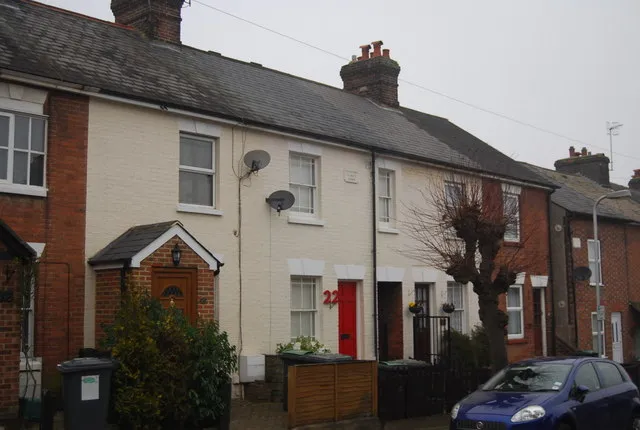
Photo: N Chadwick , CC BY-SA 2.0, via Wikimedia Commons
Older terraces are brilliant at hiding their plumbing. From the street, it's just a row of brick fronts and bin days. Out the back, it's a yard, a wall, maybe a shed and a patio that looked like a good idea in 2018. Underneath all that, though, many North West terraces still rely on drainage laid out for a very different way of living.
That doesn't mean every period property is a disaster waiting to happen. It does mean that before you lift slabs, dig footings or decide the neighbours' drain is definitely to blame, it's worth understanding what the back yard was originally doing.
The back yard was a working drainage room
A lot of Victorian and Edwardian terraces were built with the practical stuff out the back: the privy, the coal place, the ash pit, the washhouse and the yard gully. Drainage wasn't tucked neatly into a service strip. It ran where it needed to run, often in salt-glazed clay pipes, sometimes in short runs with several bends and joints.
Many of these homes ended up on a combined system, where rainwater and foul water share the same pipe. That was normal for the time. It still works for plenty of streets, but it explains why a downpour can make a gully gurgle, and why a blockage in one place can show up somewhere completely different.
The rear-yard gully is the classic example. It catches surface water from the yard and often served an outside loo or washhouse. If it's still there, it may have a trapped gully beneath a grating. If it's been paved over, it hasn't stopped being part of the drainage system. It's just become harder to find.
Cellars add another layer. Some terraces have a cellar sump or a low point designed to collect seepage. Not every damp cellar is a burst pipe. Sometimes it's groundwater doing what groundwater does, especially after a wet spell. But if that sump connects to the drainage system, or if someone has sealed it without thinking, you can get smells, damp or odd backups that don't match the rest of the house.
Clay pipes are tough, but they are not flexible
Salt-glazed clay is a good material. It lasts. It doesn't rust. It doesn't mind most of what a house throws at it. What it doesn't like is movement, heavy loads and roots finding a joint.
A terrace that has settled over a century can leave clay runs with slightly open joints. Tree and shrub roots are very good at finding those joints and very bad at leaving them alone. Add a patio, a parked van or a skip on the yard, and you can crack a pipe that had been fine for decades.
Finding a few pieces of orange clay in the soil doesn't automatically mean the drain is collapsing. It might be old rubble, a previous repair or a bit of land drain. The useful question isn't 'what's this fragment?' but 'what's the pipe doing now?' A CCTV survey answers that far better than guesswork. It also gives you a record you can keep for future buyers, builders or water company conversations.
Paving, decking and extensions change the rules
Paving over a back yard is one of the most common ways to bury a drainage problem. Not because paving is evil, but because it changes where water goes and hides the bits you need to see.
A gully can disappear under a slab. A rodding eye can end up under a planter. An inspection chamber lid can be covered by decking, then covered again by a bargain outdoor rug. The fall of the yard changes too. Water that used to run away from the house can start running towards it, or pool against the wall until it finds a weakness.
Extensions and outbuildings are the bigger version of the same issue. If footings are going anywhere near a drain, you need to know where that drain runs and who owns it. Building over a public sewer usually needs an agreement with the water company. Building over a private drain can still cause problems for you and your neighbour. 'We didn't know it was there' is not a great defence once the mini-digger has gone in.
Before any dig, check the deeds and any drainage map you have. Look for older inspection chamber covers, gullies and odd patches of gravel or brick. If the layout isn't clear, get a proper survey rather than starting with a spade and optimism.
Heavy rain exposes the weak points
Combined systems can cope with a lot, but they weren't designed for the sort of intense bursts we seem to get more often. During heavy rain, a rear-yard gully might struggle, a cellar sump might fill, and a clay run with a root intrusion might back up. That doesn't always mean a new drain is needed. Sometimes it's a capacity issue, a collapsed section, a misconnection or a gully that's been sealed by paving.
It's worth watching where water goes in dry weather and wet weather. If a drain only misbehaves after a storm, say so when you call an engineer. If it smells and backs up after normal use, that's a different clue. A simple dye test can trace which appliance or gully connects to which chamber, and it's much cheaper than replacing the wrong pipe.
Before you dig, build or blame the neighbours
Start with the obvious: lift the covers you can safely lift, note what you see and don't force anything. Keep a rough sketch. Check whether the drain is shared. In older terraces, it often is, and responsibility can sit with more than one home or with the water company depending on the pipe's status. That's worth confirming before a row starts over a blocked gully.
Then get a CCTV survey if the layout or condition is unclear. It's the difference between a sensible repair and an expensive guess. If you're planning building work, do this before the design is fixed, not after the quote has been agreed.
And don't rod blindly from the wrong access point. Old clay can be brittle, and a bit of enthusiasm with a drain rod can turn a partial blockage into a proper break.
A short pre-project checklist
- Find out whether your terrace is on a combined or separate system, and whether any drain is shared.
- Locate gullies, rodding eyes and chambers before paving, decking or planting over them.
- Keep access lids accessible, even if they're not pretty.
- Check for cellar sumps and airbricks before sealing a cellar or tanking walls.
- Book a CCTV survey before digging near drains or building an extension.
- Watch how the yard drains in heavy rain, not just on a dry Tuesday.
- Keep a simple record of what you find. Future you will be grateful.
Older terraces aren't fragile. They've already survived more weather, coal smoke and DIY than most modern estates will ever see. But their drainage rewards a bit of respect. Find out what's under the yard before you cover it up, and you're much less likely to be surprised by a smell, a puddle or a very expensive hole.