Cast Iron, Clay and Pitch Fibre: Dating Your Drains Without Lifting a Paving Slab
Most of us only think about the drain when the water stops going away. But the pipe itself is a bit of a history book. In the North West we've got Victorian terraces, 1930s semis, post-war estates and plenty of newer builds, often on the same street — and each era left behind its own plumbing signature. Knowing what yours is made of tells you a lot about how it will fail, how easy it is to fix, and whether a small problem is likely to stay small.
You don't need to dig anything up to get a decent first guess. Here's how to read the clues.
Start With What's Already Above Ground
Before anything else, have a look at the things that are already exposed:
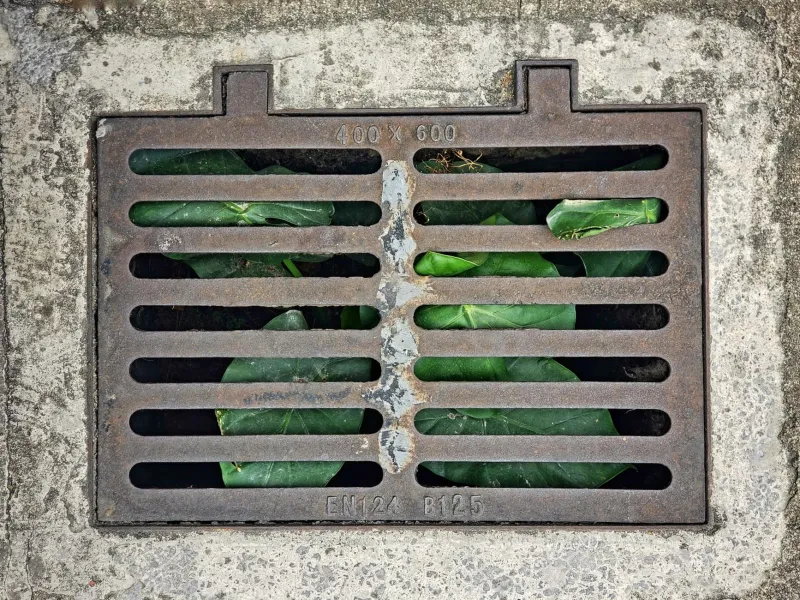
- The inspection chamber lid in the garden or drive — round, square, or a small sealed access cover.
- The gully outside the kitchen or at the bottom of a downpipe.
- The soil stack on the back or side wall, plus any rainwater pipes.
- Any pipework running along a cellar wall — very common in older Manchester and Salford terraces.
- That bit of pipe poking out of the ground near the boundary, sometimes half-buried in a flowerbed.
Two housekeeping notes. Don't force a lid that won't budge — a cracked cover is an injury waiting to happen, and some are screwed or bolted down for good reason. And if you do lift one, wear gloves, don't lean into the chamber, and wash your hands afterwards. Anything deeper than a quick look is a job for someone with the right kit.
Clay: The Survivor From the Victorian Era
Salt-glazed clay is the brownish-orange, slightly glassy-looking pipe that underpins most of the region's older housing. It's usually short sections, somewhere around a foot long, either butted end to end or socketed into one another.
Clay is enormously strong in compression — it holds up a driveway happily — but its weak point is the joint. Ground movement over a century or so displaces joints, roots find the seam, and a bit of silt turns into a lot. The classic symptoms are repeat blockages in exactly the same spot, slow draining after rain, and fine roots showing up whenever anyone rods the line.
The good news is that clay often ages well in the pipe body itself. A joint that's dropped or a single cracked section can frequently be sorted with a local repair or a short liner rather than a full replacement. If someone quotes you for digging up the whole run on the strength of one dodgy joint, ask why.
Cast Iron: Heavy, Honest and Rusting From the Inside
Iron turns up in late Victorian and Edwardian properties and hangs on well into the 1950s and 60s. It's also the traditional material for soil stacks and downpipes, which is why so many North West backs still have a cast iron stack doing quiet service.
From the outside, iron looks reassuringly solid. The trouble is on the inside. Over decades, corrosion builds up scale that narrows the bore, so a pipe that once flowed freely now backs up if two people shower in a row. There's also a phenomenon called graphitisation, where the metal softens into a graphite-like residue — the pipe still has its shape, but it's lost most of its strength. A light tap with a screwdriver handle will sound dull rather than ringing.
The other classic is a snapped collar just below ground level, usually where the pipe meets the first bend. If you've got a rusty-brown stain on paving or a persistent smell near a wall, iron is a prime suspect. On the plus side, cast iron is strong, quiet, and a sound stack is well worth keeping.
Pitch Fibre: The Mid-Century Material That Hasn't Aged Well
If your house went up between roughly 1955 and 1975, there's a fair chance the drainage is pitch fibre — wood fibre impregnated with coal tar pitch, sold at the time as a lightweight modern alternative to clay and iron. It's usually a dull grey-brown, and the joints are tapered push-fits sealed with pitch rather than rubber rings.
Pitch fibre's problem is that it has a memory for every load it's ever taken. It deforms. Sections go oval, then pear-shaped, then flatten altogether under a driveway or a heavy wheelbarrow route. It delaminates at the seams, and the pitch itself softens when it's hit with hot water or a dose of caustic soda. Rod it with a metal drain rod and you can punch straight through the wall.
This matters because pitch fibre is often a replace-not-repair material. If a 1960s or 70s property has never had drainage work and starts blocking repeatedly, it's worth assuming pitch fibre until a camera survey proves otherwise. Patching a collapsing run tends to be money spent twice.
Plastic: Modern, But Not Indestructible
uPVC arrived in the 1970s and now dominates. It's cheap, light, smooth-bored and quick to fit — genuinely good stuff when it's installed properly. The failures are usually installation rather than material: a shallow fall that never quite worked, a joint pushed home without enough lubrication and left slightly out, ground movement pulling a seal apart, or a rat deciding the rubber ring looks like lunch.
Above ground, older plastic pipework can go brittle after years of sun. And any plastic drain that's been driven over, however briefly, deserves a look — it flexes back into shape and hides the crack until the next heavy rain.
Why the Material Changes the Conversation
Once you know what's under there, several things get clearer:
- Surveys can be tailored. A camera survey should tell you the material as well as the condition, and the two together drive the recommendation.
- Buying a house — an old material is not automatically a problem. A 100-year-old clay run in good nick is often better than a 15-year-old plastic one with no fall.
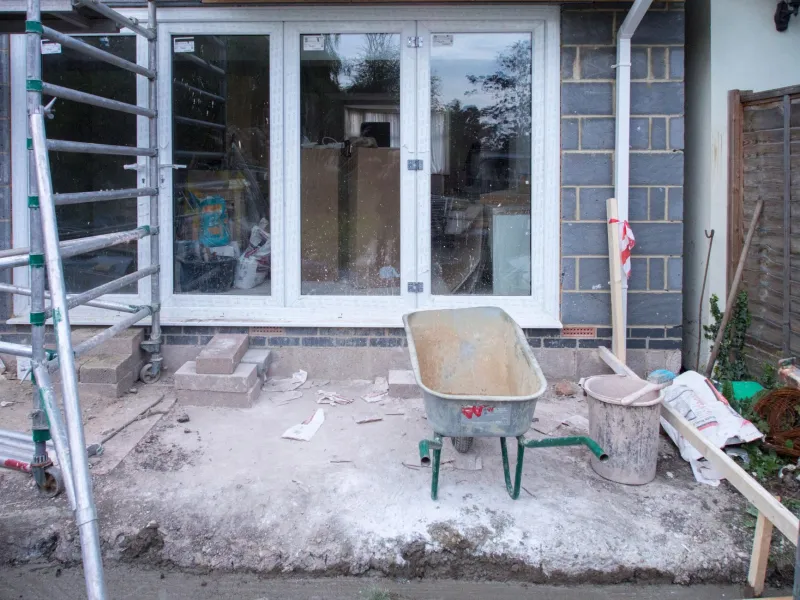
- Renovation and landscaping — new driveways, extensions, raised patio levels and tree planting all load the ground above the pipe. Knowing the material tells you how much risk you're carrying.
- Repair strategy — patch, line or replace all have material-specific limits, and a good engineer will say so plainly rather than quote for the biggest job available.
The Sensible Next Step
If you've got a nagging suspicion about what's buried out there, the answer is a proper CCTV survey, not a hopeful poke with a rod. Ask whoever attends to name the material in writing on the report, along with the defects and the recommended fix. Keep that report — it's exactly the sort of thing a future buyer's solicitor will ask for, and it saves you explaining the same story twice.
And whatever the pipe turns out to be, keep the caustic soda in the cupboard. Some materials forgive it. Others really don't.