Coal Chutes, Cellar Taps and Concrete Slabs: Hunting the Drains Your Old Terrace Forgot
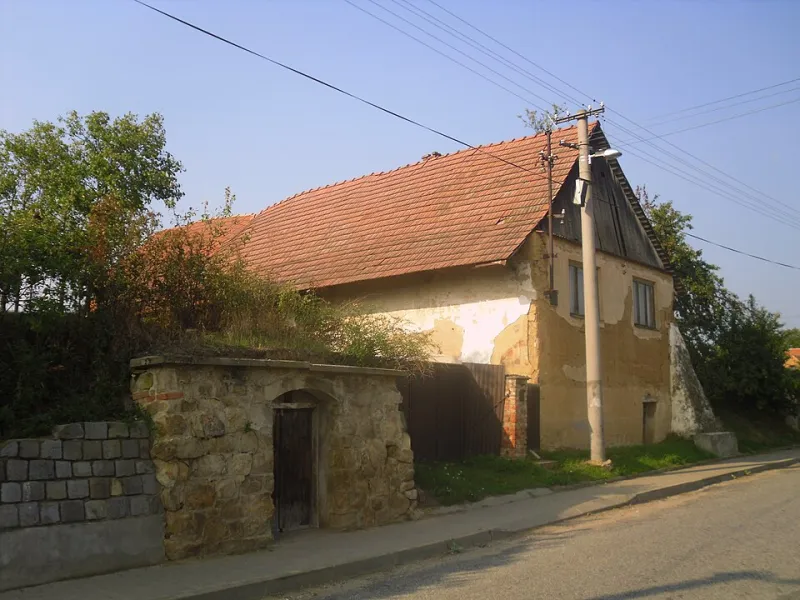
Photo: This image is a work by Mercy. When reusing, please credit me as: Mercy from Wikimedia Commons. I would appreciate being notified if you use my work outside Wikimedia. Do not copy this image illegally by ignoring the terms of the license below, as
There's a particular kind of damp you get in a Salford cellar that has nothing to do with the water table. It sits in one corner, it smells faintly of drains after heavy rain, and it never quite dries out, whatever you do with the dehumidifier. More often than not, there's a ghost gully involved — an old wash-house drain or cellar tap connection that got covered over in the 1970s and has been quietly minding its own business ever since.
Why so many North West homes have drains nobody remembers
If your house went up before the Second World War — mill terraces, Accrington brick, the sort of stock that fills swathes of Bolton, Blackburn, Oldham and the east side of Liverpool — it almost certainly had drainage features that a modern homeowner would never think to install. A back-yard wash house with a slop stone and a gully. An outside privy with its own connection. A coal chute with a small drain to stop the coal sitting in a puddle. Plenty of cellars had a Belfast sink and a cold tap, fed off the mains and drained straight into the same run as the yard gully.
Then the indoor bathroom arrived, the wash house got knocked through or filled in, the coal fire went, and one by one those gullies were capped, slabbed or simply buried under a few inches of concrete. The pipework below didn't go anywhere. It's still tied into your drainage, or into the shared run behind the terrace, and it's still doing something — even if that something is just collecting water and holding it.
Six signs there's something under there
You don't need to start lifting flags to get a decent idea. Look for these:
- A rectangular dip or patch in a concrete yard, especially one that's slightly lower than everything around it and holds a puddle after rain.
- White salt bloom or a persistent damp patch on a cellar wall at low level, appearing after wet weather rather than after baths or showers.
- A stub of clay pipe or a rusty iron grate poking out of a wall base, half-buried.
- An old brass tap on the cellar wall with no obvious supply — or worse, one that still dribbles.
- A drain smell that lives in one corner of the yard and gets worse after a downpour.
- Gurgling from a downstairs toilet or a yard gully when next door flushes.
Any one of those on its own is a curiosity. Two or three together and it's worth doing something about before you spend money on the space above it.
Why burying it never really works
A gully isn't just a hole in the ground. It's a trap, a connection and often a vent. Cap the top and the water that used to drain away now sits in the pipe below, or in the ground around it, or in the void of the old trap. In clay soils — and there's plenty of that across Lancashire and Cheshire — it just lurks. In sandy, free-draining ground it disappears, which is fine until the day it undermines whatever you've built on top.
The bigger issue is the connection. That old gully is almost certainly tied into either your own drainage or a shared run serving the neighbouring terraces. Block it badly and you can push water back up someone else's line, or create a dead leg where sewer gas collects and finds its way into the house. There's also the small matter of responsibility: if the run it connects to is shared with next door, it isn't purely yours to fill in and forget.
The cellar tap that's still live
One of the more underrated risks in an old cellar is a tap that's still connected. Lead supply pipes were often left in situ when kitchens moved upstairs, capped at one end and left dribbling at the other. They freeze, they weep, they occasionally let go entirely. If you've got a tap with no visible reason to be there, trace it before you box it in behind plasterboard — a plumber with a bit of patience will find where it tees off, and capping it properly at source is a morning's work rather than an insurance claim.
Before you concrete, extend or sell
Three moments where a survey genuinely pays for itself:
- You're about to lay a slab, a patio or a conservatory base. Once it's poured, investigation costs triple.
- You're selling. Drainage questions on the property information form and the standard drainage and water search have a habit of unearthing things you'd rather have known about first.
- You've got persistent damp or a recurring backup that nobody can explain.
A CCTV drain survey with a written report and plan typically runs somewhere in the region of £200 to £450 for a domestic property in the North West, more if access is awkward. Ask for the plan and the depths, not just the footage — that's the bit that tells a builder where not to dig. If any part of the run turns out to be a public sewer and you're planning to build over it, you'll need a build-over agreement with the water company regardless of what the old gully is doing.
Do a bit of homework first
Old Ordnance Survey maps at the 25-inch scale often show wash houses and outside privies clearly, and your local reference library or archive will usually have them. Failing that, knock on next door. In a terrace, your neighbour's yard is a mirror of yours, and there's a decent chance they've already dug theirs up and can tell you exactly what's down there — and roughly how deep.
The short version
A forgotten gully is rarely urgent and almost never harmless. If you're leaving the space alone, it can sit there for years. The moment you're planning to cover it with something permanent, the cheapest money you'll spend is the survey that tells you what you're building on.